 语音小管家
语音小管家来源丨新智元 SafeEar是一种内容隐私保护的语音伪造检测方法,其核心是设计基于神经音频编解码器的解耦模型,分离语音声学与语义信息,仅利用声学信息检测,包括前端解耦模型、瓶颈层和混淆层、伪造检测器、真实环境增强四部分。
论文地址:https://safeearweb.github.io/Project/files/SafeEar_CCS2024.pdf
论文主页:https://safeearweb.github.io/Project/
代码地址:https://github.com/LetterLiGo/SafeEarCVoiceFake
数据集地址:https://zenodo.org/records/11124319
浙江大学智能系统安全实验室(USSLAB)与清华大学联合提出SafeEar,一种内容隐私保护的语音伪造检测方法。
SafeEar的核心思路是,设计基于神经音频编解码器(Neural Audio Codec)的解耦模型,该模型能够将语音的声学信息与语义信息分离,并且仅利用声学信息进行伪造检测(如图1),从而实现了内容隐私保护的语音伪造检测。
该框架针对各类音频伪造技术展现良好的检测能力与泛化能力,检测等错误率(EER)可低至2.02%,与基于完整语音信息进行伪造检测的SOTA性能接近。同时实验证明攻击者无法基于该声学信息恢复语音内容,基于人耳与机器识别方法的单词错误率(WER)均高于93.93%。
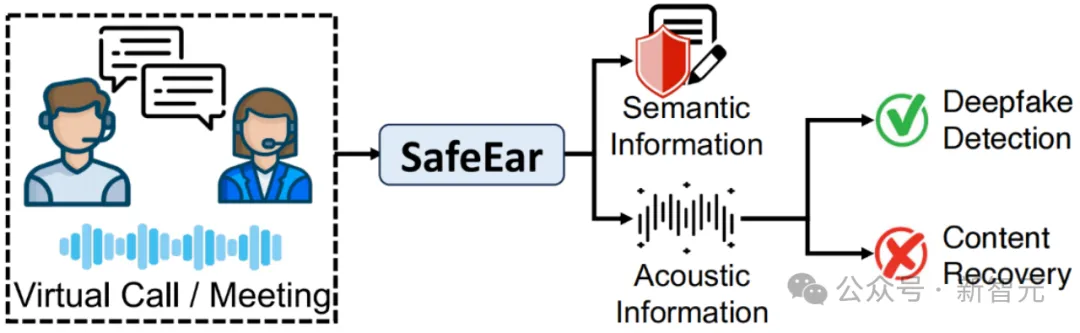
图1 SafeEar原理示意图
方法概述
SafeEar采用一种串行检测器结构,对输入语音获取目标离散声学特征,进而输入后端检测器,主要框架如图2所示。
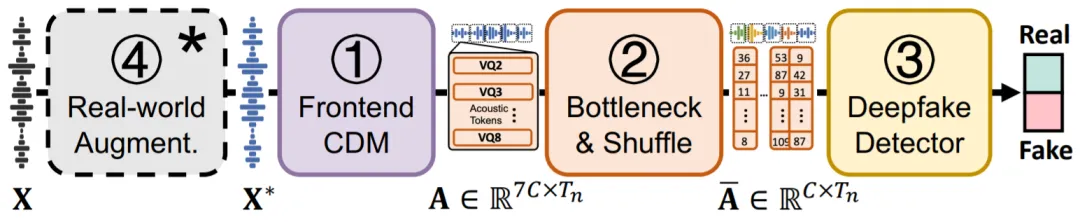
图2 SafeEar框架示意图。(虚线方框内的④Real-world Augmentation仅在训练时出现,推理阶段仅有①②③模块)
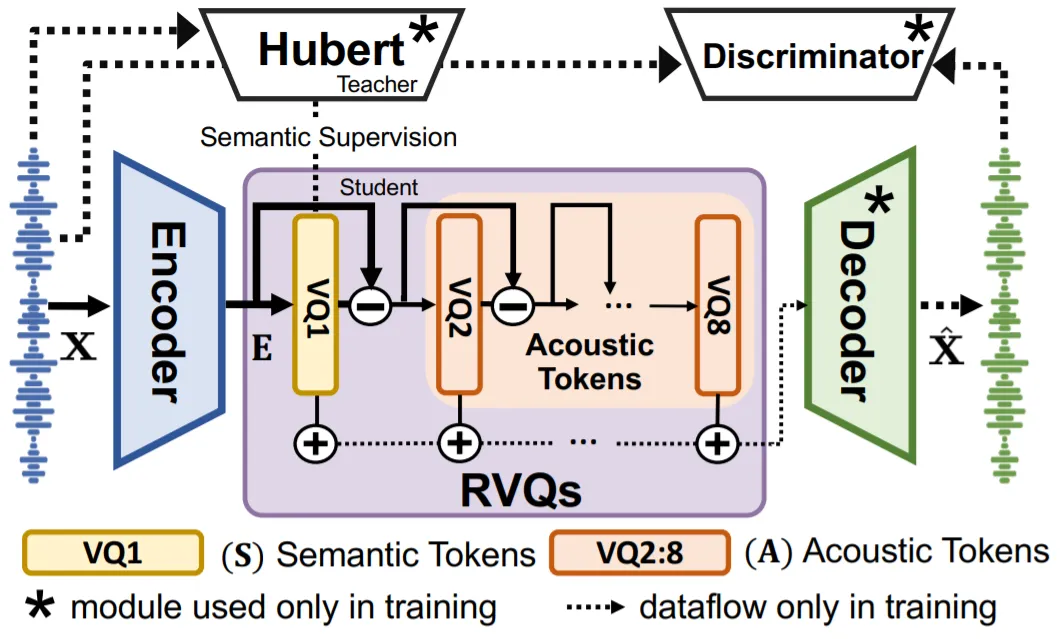
图3 基于神经音频编解码器的解耦模型示意图。
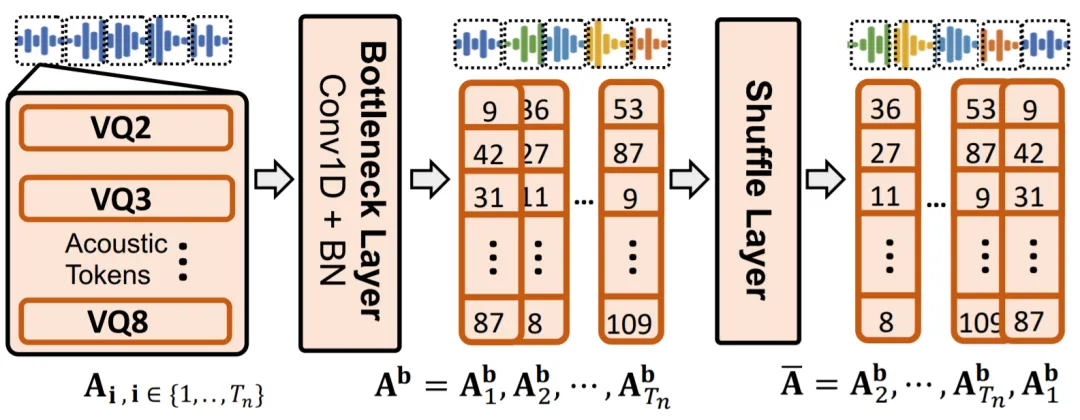
图4 瓶颈层和混淆层示意图
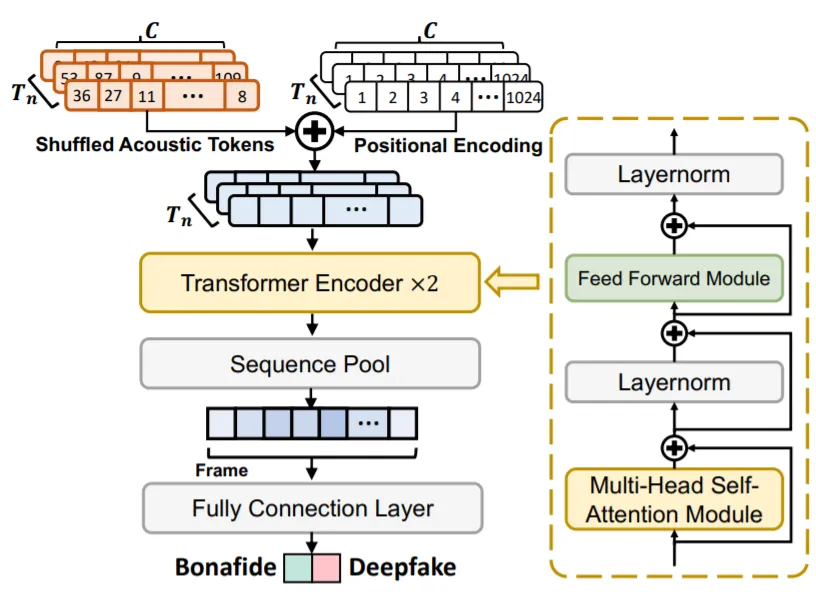
图5 基于声学特征的语音伪造检测分类器
实验结果
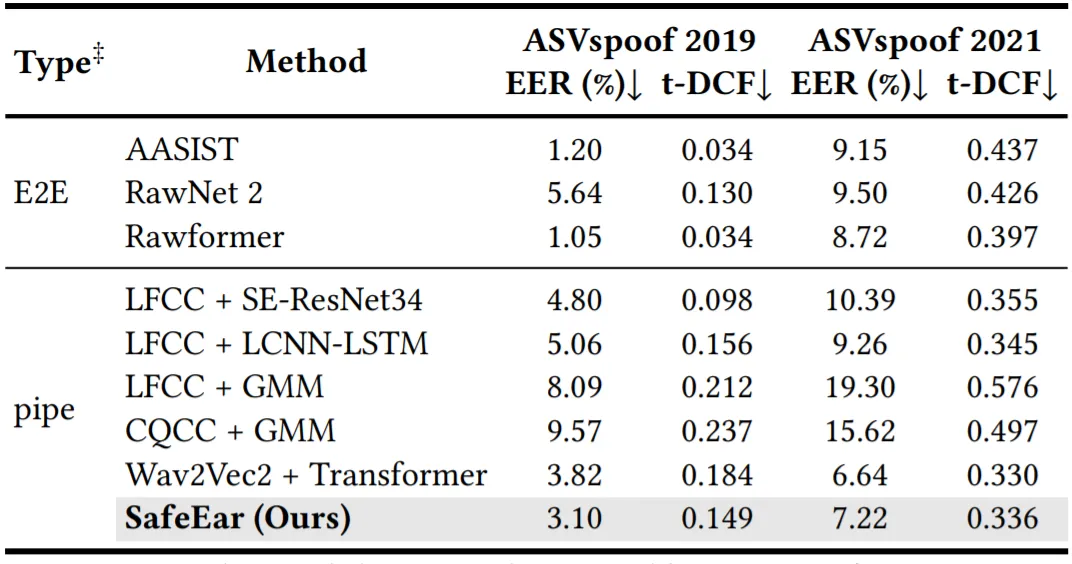
表1 整体伪造检测效果对比
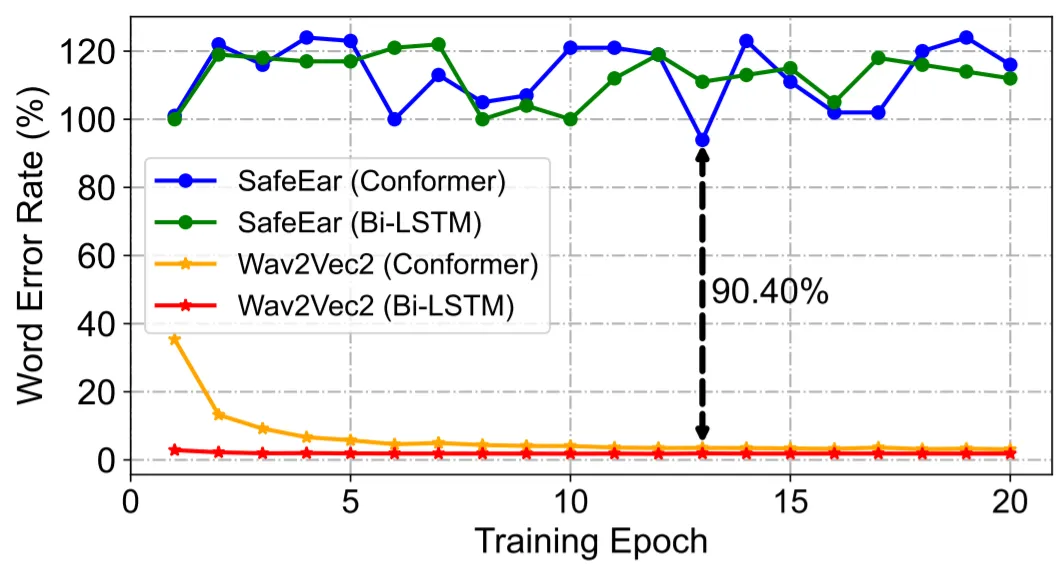
图6 训练过程中验证集上词错误率变化曲线(CRA1)。可见ASR模型(Conformer、Bi-LSTM)对于SafeEar保护后的语音始终无法识别,WER曲线保持过高数值且震荡;而对于完整音频,ASR模型可迅速收敛并在验证集上取得极低的WER
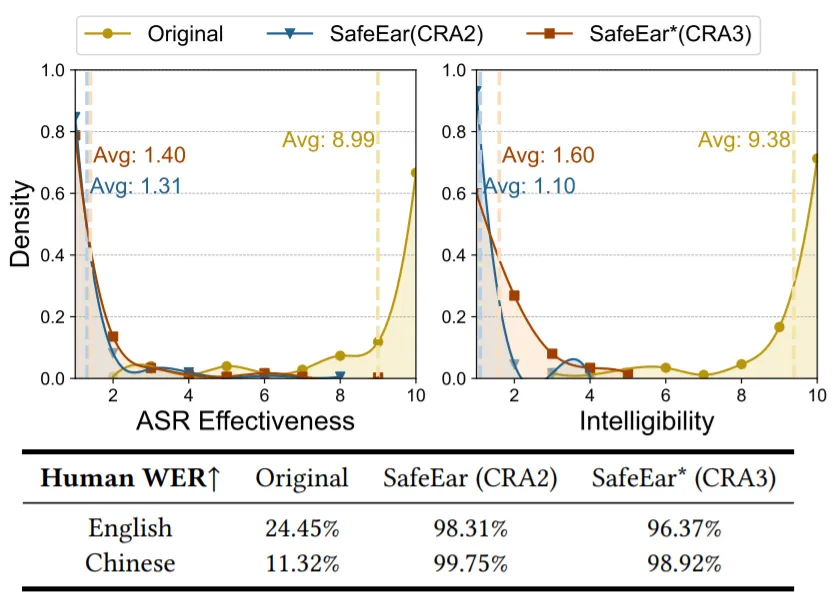
图7 真实的用户调研表明,ASR模型被认为能够有效识别完整音频(高达Original: 8.99),而对于SafeEar面对不同攻击者等级下的识别效果始终很差(低至CRA2: 1.31、CRA3: 1.31);同理人耳听感的清晰度分别为Original: 9.38、CRA2: 1.10、CRA3: 1.60。当用户模拟攻击者尝试恢复语音内容时,在SafeEar保护下的WER始终高于96.37%
总结与展望
参考资料:
[1] Chaiwongyen A, Songsriboonsit N, Duangpummet S, et al. Contribution of Timbre and Shimmer Features to Deepfake Speech Detection[C]. 2022 Asia-Pacific Signal and Information Processing Association Annual Summit and Conference (APSIPA ASC). Chiang Mai, Thailand: IEEE, 2022: 97-103.
[2] Li M, Ahmadiadli Y, Zhang X P. A Comparative Study on Physical and Perceptual Features for Deepfake Audio Detection[C]. Proceedings of the 1st International Workshop on Deepfake Detection for Audio Multimedia. Lisboa Portugal: ACM, 2022: 35-41.
[3] Zhang, X., Zhang, D., Li, S., Zhou, Y. and Qiu, X., 2023. SpeechTokenizer: Unified Speech Tokenizer for Speech Large Language Models. International Conference on Learning Representations (ICLR) 2024.
[4] Liu, X., Liu, M., Wang, L., Lee, K.A., Zhang, H. and Dang, J., 2023, June. Leveraging positional-related local-global dependency for synthetic speech detection. In ICASSP 2023-2023 IEEE International Conference on Acoustics, Speech and Signal Processing (ICASSP) (pp. 1-5). IEEE.
[5] Jung J weon, Heo H S, Tak H, et al. AASIST: Audio Anti-Spoofing using Integrated Spectro-Temporal Graph Attention Networks[J]. arXiv, 2021.
[6] Jung J weon, Kim S bin, Shim H jin, et al. Improved RawNet with Feature Map Scaling for Text-independent Speaker Verification using Raw Waveforms[J]. arXiv, 2020.
[7] Liu X, Liu M, Wang L, et al. Leveraging Positional-Related Local-Global Dependency for Synthetic Speech Detection[C]. ICASSP 2023 - 2023 IEEE International Conference on Acoustics, Speech and Signal Processing (ICASSP). Rhodes Island, Greece: IEEE, 2023: 1-5.
[8] Pal M, Raikar A, Panda A, et al. Synthetic Speech Detection Using Meta-Learning with Prototypical Loss[J]. arXiv, 2022.
[9] Wang X, Yamagishi J. A Comparative Study on Recent Neural Spoofing Countermeasures for Synthetic Speech Detection[J]. arXiv, 2021.
[10] ASVspoof2021 challenge organizers. ASVspoof 2021 Baseline CM & Evaluation Package[EB/OL]. 2021. https: //github.com/asvspoof- challenge/2021.
[11] Yamagishi J, Todisco M, Delgado H, et al. ASVspoof 2019: Automatic Speaker Verification Spoofing and Countermeasures Challenge Evaluation Plan[R]. ASV Spoof, 2019: 13.
[12] Delgado H, Evans N, Kinnunen T, et al. ASVspoof 2021: Automatic Speaker Verification Spoofing and Countermeasures Challenge Evaluation Plan[J]. arXiv, 2021.